Sunday, January 26, 2014

Humpback Whales

January and February in Maui, Hawaii are peak times to view the enormous Humpback whale, there to take advantage of the warmer water for flirting, breeding, and calving. Competition among the males creates some of the best whale-watching as they gather in pods of 3 to 10 whales surrounding a female like closing time at the local bar.


Humpback adult whales average 40-50 feet in length and weigh between 70,000 to 90,000 lbs.  The average weight of the heart of a Humpback is about 430 lbs. Think of the Humpback as a school bus with flippers.

The above photo (rare) is of a Humpback "spy-hopping," a term used to describe the behavior of the whale as it treads water and sticks a portion of its head out of water in order to observe the surroundings, in this case a raft containing amazed and gawking tourists.  The eyes of this whale are below the surface of the water; whales see equally well in both air and water. This curious whale stayed for about 10-15 seconds before submerging.

 "Breaching" is when the whale projects itself high out of the water and noisily slaps the water with its body and fins as it lands. It is speculated that it does this to attract attention or simply because it is fun. (It's also very difficult---I tried in the bathtub but failed.)


When the Humpback dives, its enormous fins are the last image you see as it goes down into the ocean.  Note the barnacles beginning to form.


The Humpbacks usually migrate from Hawaii back to Alaska, returning there in late summer to feed on krill and other food sources. By this time, there are many calves accompanying the Humpbacks.  After a gestation period of about one year, calves are born (tail first) weighing about 4,500 lbs. and the length of about 14 feet.
 
We were in Alaska's inside passage years ago and observed Humpback calves slapping their fins and breaching for long periods without stopping, much like playful children. (see photo below)


I encourage you to see these beautiful creatures in their environment---it is an everlasting memory.


Thursday, November 14, 2013

Macro photos---less is more!

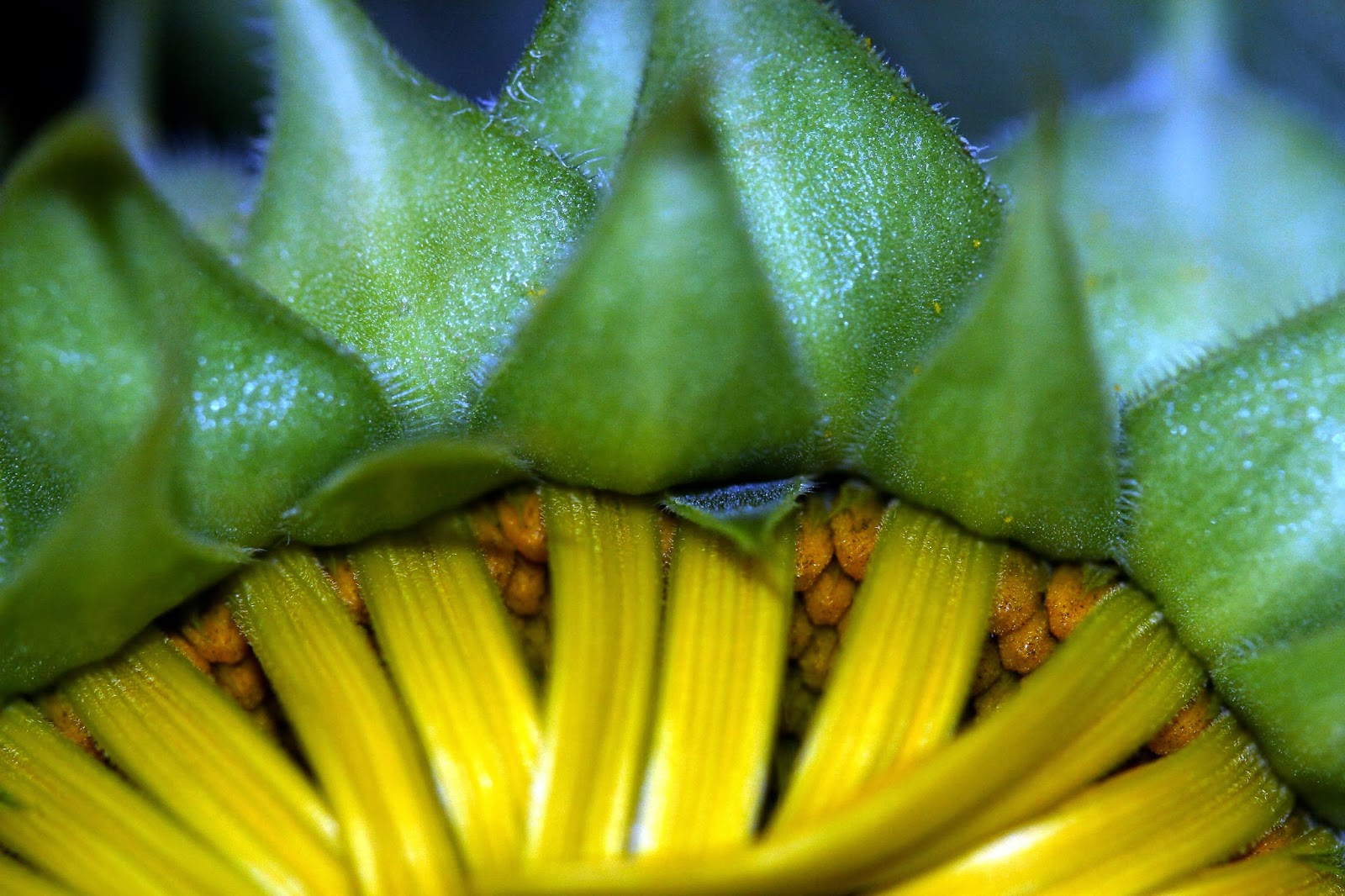
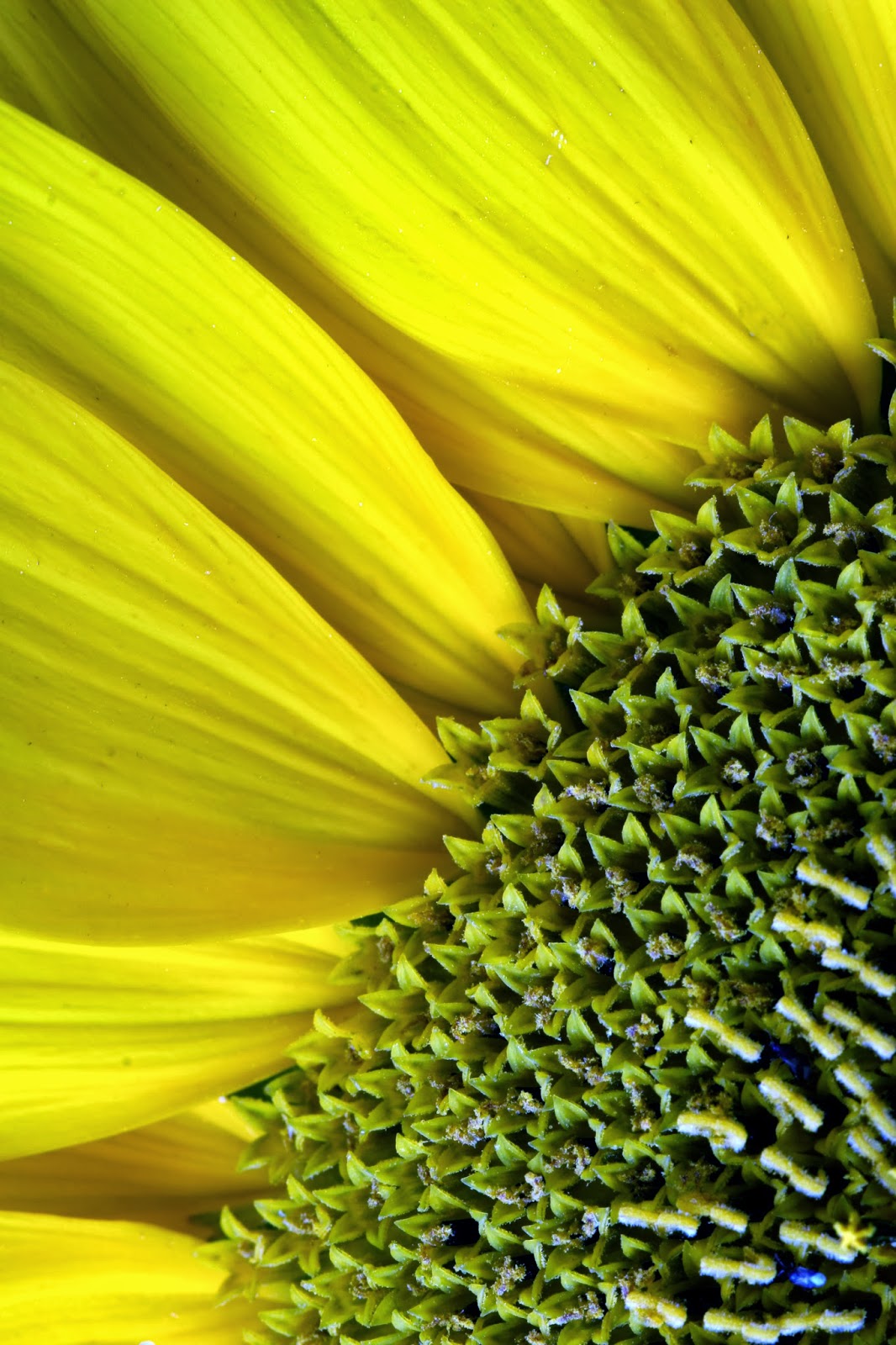
Macro photography simply defined refers to photographing small objects and making them large.  For example, the photo close-up of a bug that emphasizes its bulging eyes or, as in the series below, the photographing of flowers from a very close point of view that produces a large image.

The macro process often challenges our perception of the object, and we don't always recognize it.


These three photos are of tulips:                                                 


The next series includes macro shots of orchids, most of them taken at Bayside Nursery:


Daisies, sunflowers, roses, begonias---all perfect for macro photography:


This bumblebee was too busy working in the hollyhock to notice my intrusion:


 Disclaimer:  I may have erred in some of the flower names.  Feel free to make corrections!


Friday, October 18, 2013

Autumn in Wisconsin


“I would rather sit on a pumpkin, and have it all to myself, than be crowded on a velvet cushion.”   
-Henry David Thoreau
 
“Delicious autumn! My very soul is wedded to it, and if I were a bird I would fly about the earth seeking the successive autumns.”    
-George Eliot

I like autumn a lot.
-Fred Thorne
 
 
These photos were taken during fall outings in Ozaukee County, Marinette County, North Kettle Moraine, the rustic roads in the Holy Hill area and other parts of Wisconsin.  
 
 
Goodman, Wisconsin mill pond.
 

Dave's Falls, Marinette County


North Kettle Moraine
 

Cedar Creek, Cedarburg
 
 
Kettle Moraine
Mequon Road
 
Northern Wisconsin


Northern Wisconsin
Dave's Falls
Cedarburg, Wisconsin


Fall Abstract, Lion's Den Gorge, Grafton, Wisconsin


Monday, October 14, 2013

Moths and Mimicry


The Bumblebee Moth (Snowberry Clearwing) and the Hummingbird Moth (Common Clearwing) are imposters. 

You guessed it!  One imitates a Bumblebee and the other a Hummingbird. Both have a very large proboscis (stop giggling!) which is coiled until ready to insert into a flower to extract the nectar within.  Both moths hover around the flowers and are ready for a fast escape if needed.

It is surmised that the Bumblebee Moth mimics a real Bumblebee to intimidate possible predators who would otherwise have it for lunch but are wary of Bumblebees.


Note the translucent wings and Bumblebee-like markings.

Proboscis unfurled.
 

The Hummingbird Moth has more coloration and emits a "humming" sound much
like a hummingbird.  (I was not able to identify the intruder moth.)


You can clearly see the proboscis in action here.


This moth obviously mimics "Vlad the Impaler, " aka Dracula.  I have no idea what kind of moth it is---I post it only because it's very cool!


Monday, September 9, 2013

Potpourri


  These photos are some of my personal favorites. 


Every once in a while an opportunity for artistic expression pops up.  (Edited)


The journey.

Early morning at Lion's Den Gorge.
Seagull feathers have beauty after all.
Julia meets tulip.


A Great Blue Heron at breakfast.

Sleeping sunflower.


A little bit of nature's framing at Zion National Park.
The grace of fall at Holy Hill.
A White Heron pinked.